What we want to improve
I distinguish texture and wrinkles from scars, pigmentation or lesions needing a different diagnosis. Before treating a lesion for its appearance, we need to know what it is.
Resurfacing and skin quality
CO2 laser works on the skin surface and skin remodelling. I use it for texture, wrinkles and scars, alone or alongside other procedures. The device matters, as do the indication and how treatment is tailored.
Video · 7 minutes · in Spanish
What it improves, what happens on the day, whether it hurts, recovery, results, risks and price. The video is in Spanish with subtitles.
The video loads from YouTube when you press play. Privacy · Open on YouTube
Assessment and treatment
I assess skin phototype, medical history, sun exposure and the treatment area. Eyelid, cheek and neck skin require different decisions; I do not use a single setting for the entire face.
I distinguish texture and wrinkles from scars, pigmentation or lesions needing a different diagnosis. Before treating a lesion for its appearance, we need to know what it is.
I tailor energy, treatment density and passes to each area and goal. More intensive treatment is not automatically better: it also changes recovery and risk.
I combine it with blepharoplasty and double-chin treatment to address the skin as well. It can be combined with fat grafting when volume and surface both need attention within the same plan.
Treatment day
We take standardised photographs and review the plan area by area: the intensity each part of your face needs.
Under sedation, given by an anaesthetist, plus local anaesthesia. Less intensity around the eyes, more on barcode lines and lax lateral areas, and a gradual taper towards the neck and chest so there is no visible edge.
You recover at the clinic and go home with instructions and a kit containing all the creams and treatments you need.
You send me a daily email with photos so I can follow your recovery and advise you, and you receive a schedule of follow-up visits.
After treatment
A light resurfacing takes 5 to 10 days to recover, and an intensive one 7 to 14. At first there is swelling and oozing; then fine crusts form and fall off within days. I recommend setting aside two weeks. Once the crusts fall, the skin stays pink while it builds collagen: you can already wear make-up or tinted sunscreen and return to normal work and social life.
Realistic expectations
I control the setting, technology, technique and intensity; the response comes from your skin’s biology, and everyone responds differently. That is why I do not guarantee the same result for everyone. Nor does it replace every surgical procedure or suit every skin at every time.
Real cases
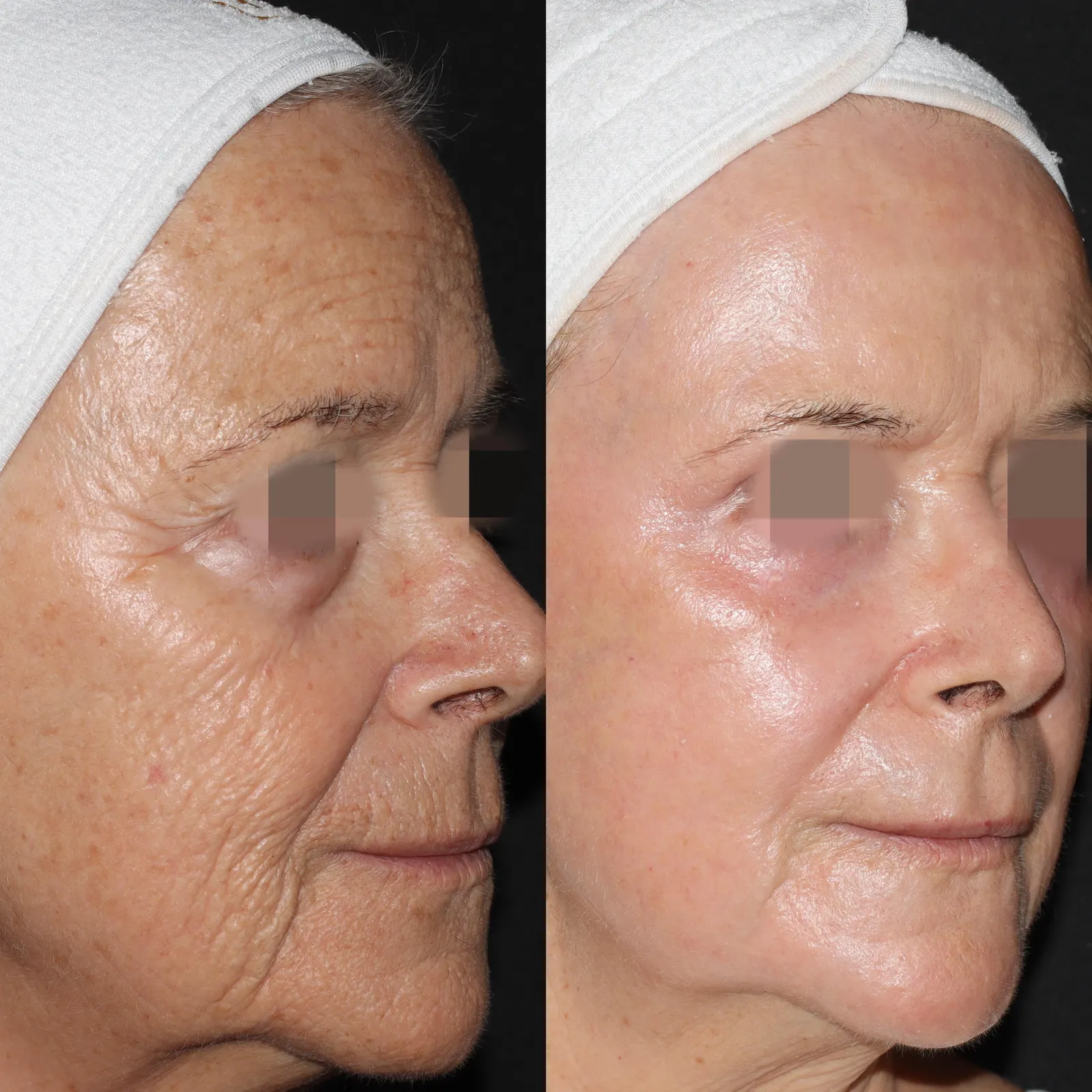
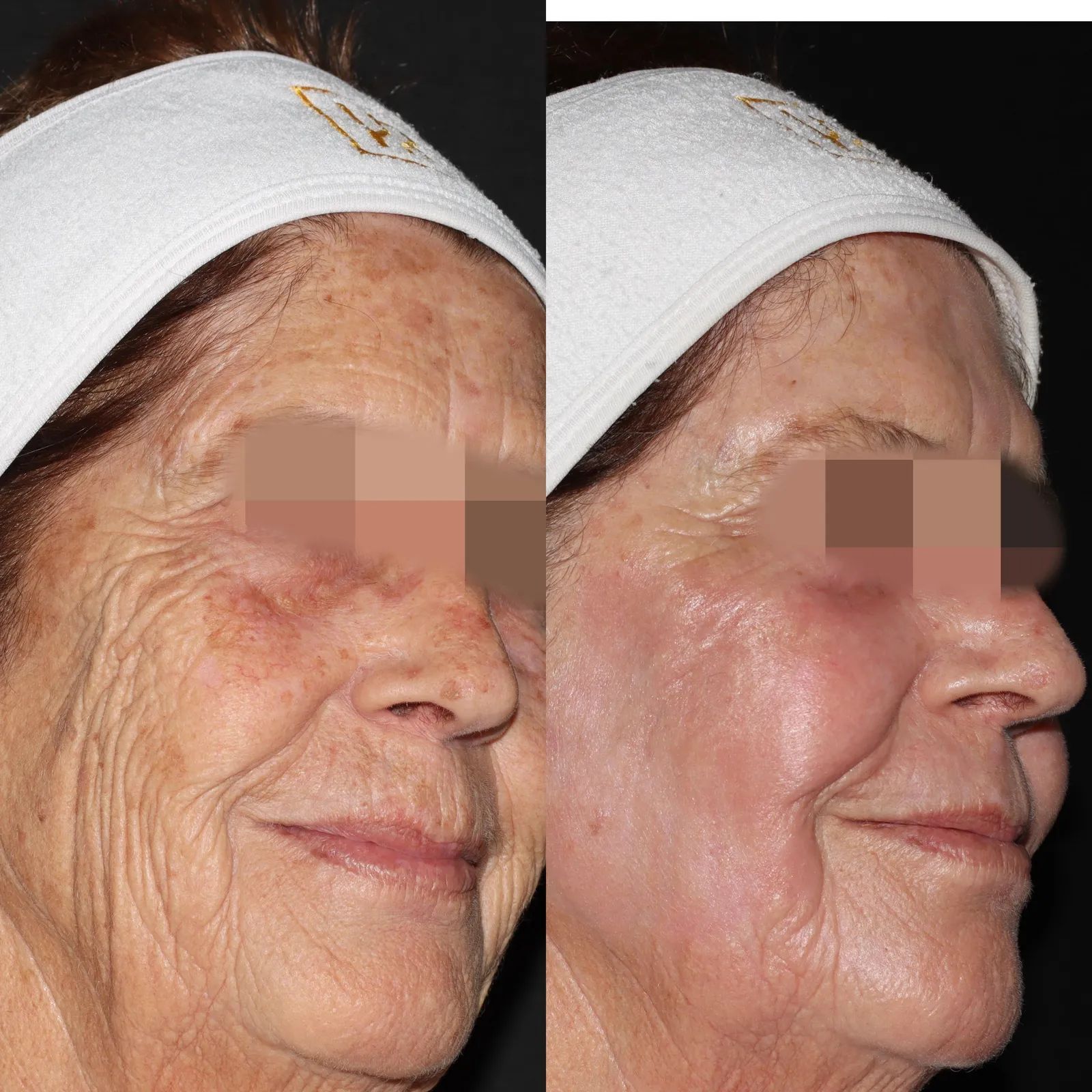
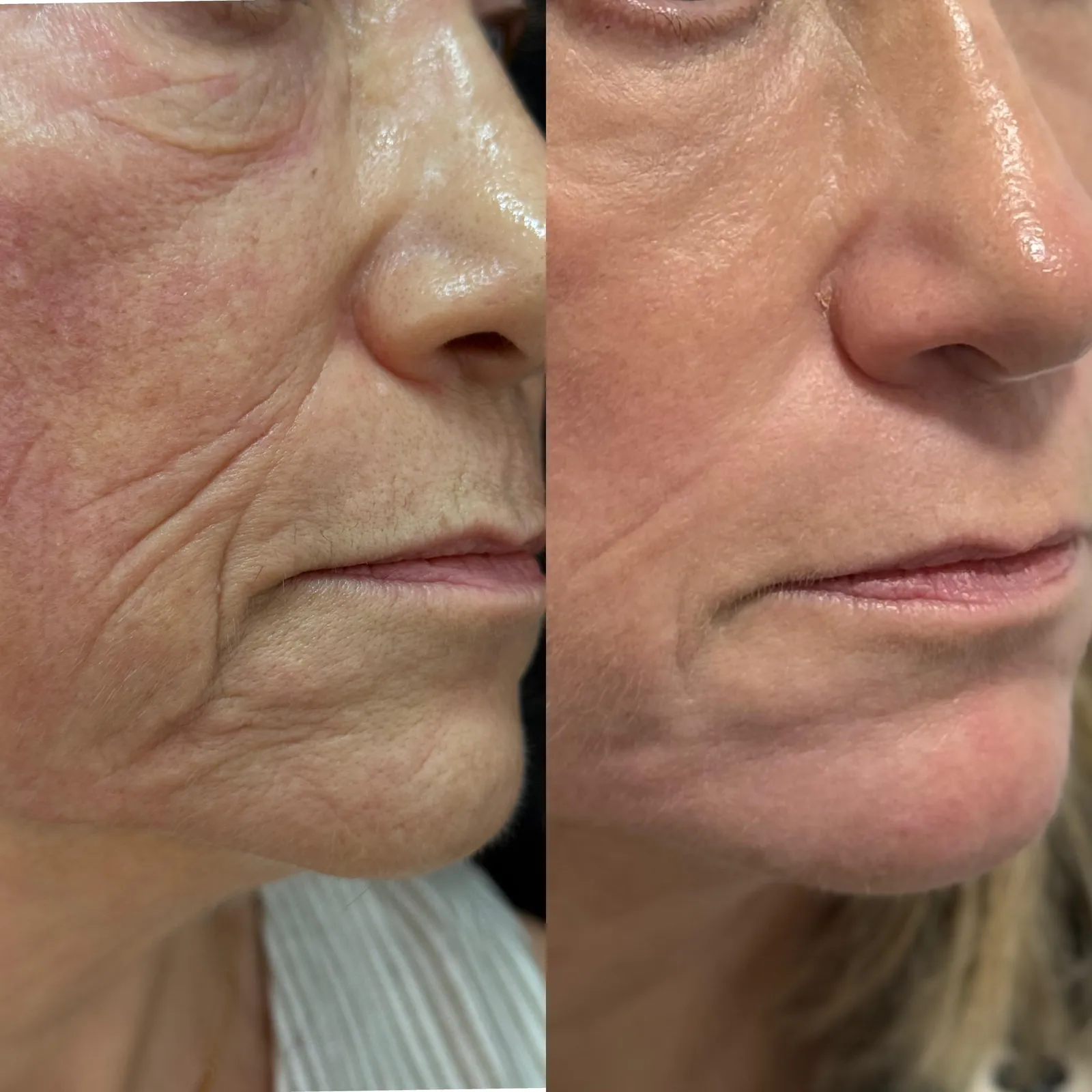
Real patients who have authorised the use of their images. Features have been hidden to protect their identity. Results vary from person to person.
Patient reviews
«Dr Torres performed CO2 laser resurfacing on me and I am delighted with the result. […] What I liked most was how accessible he was after the treatment: I could ask every question I had about how my skin was healing.»
«This morning I went with my mother, who had a blepharoplasty and resurfacing a month ago. She could not be happier! It looks spectacular […] especially Dr Nacho Torres, who is a master of laser.»
«Fourteen days ago I had CO2 laser resurfacing, including a blepharoplasty and treatment of my lower eyelid bags. The first week requires patience […] (they tell you so from day one, openly), but from the end of the second week you can see progress day by day.»
Excerpts from reviews published on Google; names are shortened. See all reviews
Frequently asked questions
It treats small columns of skin, leaving untreated areas between them. This differs from treating the entire surface continuously. The mode is chosen according to the goal and area.
No. I perform it in the operating room under sedation, given by an anaesthetist, plus local anaesthesia, so you are comfortable throughout. Sedation is quoted separately, from €500.
Between 5 and 10 days for a light resurfacing and 7 to 14 for an intensive one. I recommend setting aside two weeks. During recovery you send me a daily email with photos so I can follow you, and you receive a schedule of follow-up visits.
As soon as the crusts fall, the skin is smoother, firmer and less wrinkled. It keeps producing collagen and elastic fibres for months, and the result keeps improving for up to a year and a half. Results last for years.
Yes. Published studies show that resurfacing reduces the risk of non-melanoma skin cancer in treated skin, because it renews sun-damaged skin. It is an added benefit: it does not replace sun protection or skin checks.
Prevention is key: I give antiviral treatment, follow you closely and give you very clear instructions. Redness, some swelling and temporary pigmentation are expected consequences that fade with time. Complications, which are uncommon, would be abnormal scarring or hypopigmentation; close follow-up allows them to be detected and treated early.
Full-face CO2 resurfacing costs from €2,400 per session; most treatments are €3,700 and deeper or more extensive ones €4,900. Individual areas from €1,800 per session (most often €2,400). The price includes the operating room, a home-care kit with all the creams, one fractional picosecond laser session a month later, four follow-up visits, email follow-up and care of any complication. Sedation, given by an anaesthetist, is quoted separately, from €500. After the consultation you receive a fixed quote. See all fees.
General information to support your consultation. Indications, risks and recovery are assessed individually; results vary between patients.